
Brevard County Court Records After a Jail Arrest
After an arrest in Brevard County, the path to a court record runs through a few clear steps. The person is booked into the Jail Complex. A judge reviews custody at first appearance. The state attorney then decides what to charge, and the formal charges become the court record for the case. From that point forward, the court file is the authority on the accusation, not the arrest paperwork.
It helps to keep the two sides separate. The booking and arrest side lives on the jail roster, covered on the jail inmate records page, and booking photos are explained on the jail roster mugshots page. The court record is a different document set: the charges the prosecutor filed, the hearings, and the disposition. What follows covers the court records that come after an arrest, where to find them, and how to read them.
How to Find Brevard County Court Records After an Arrest
Brevard court records are searched through the Brevard Electronic Court Application, known as BECA, on the Clerk of Courts Case Search page. The public option opens after you accept a disclaimer. Registered users with an agreement get a deeper subscriber view. The clerk warns that online records are informational and do not replace the official court file.
- Open the Brevard Clerk Case Search page and choose the general public court records search.
- Accept the disclaimer, then search by defendant name or by case number.
- Open the case to read the charge list and the docket.
- Check each charge's code, level, and current status, and note the hearing dates.
The case-search landing page is shown below.
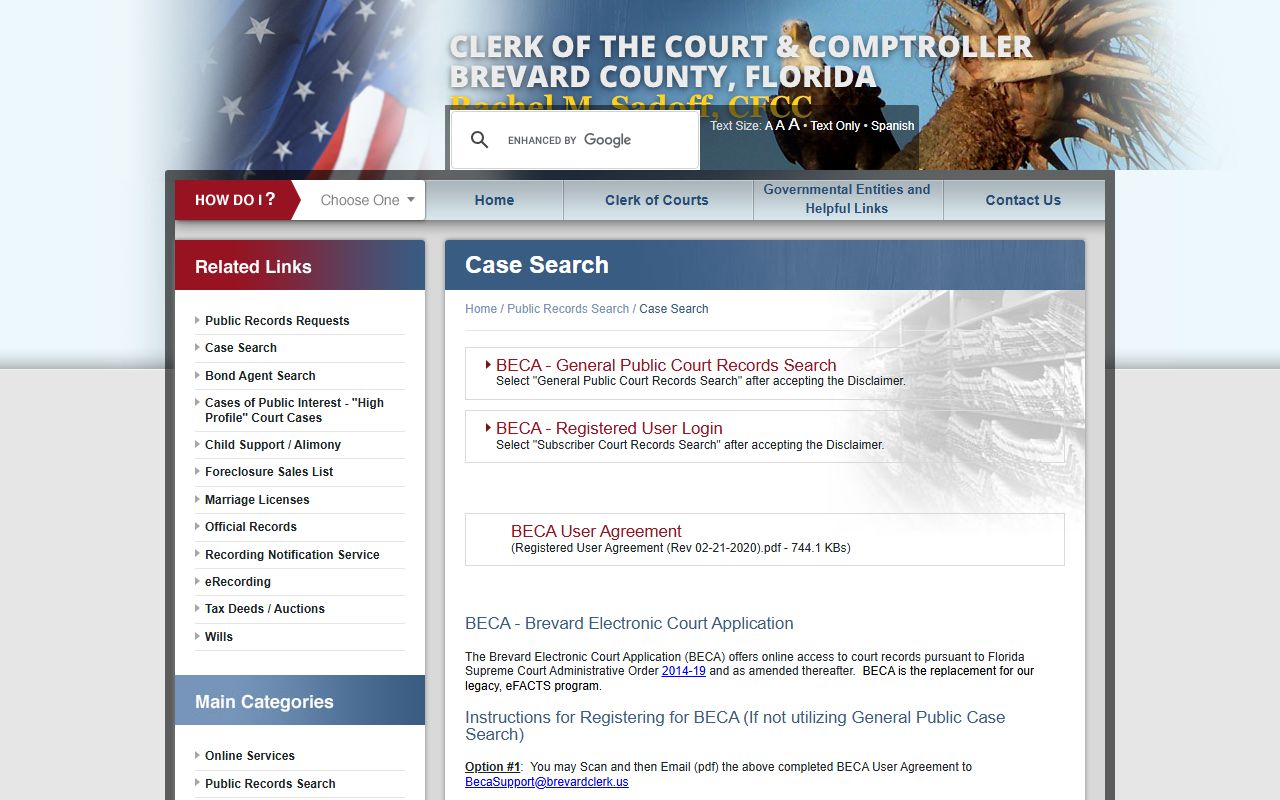
From that page you pick public access or registered access, then move into the BECA search itself. The disclaimer screen you accept first is shown next.
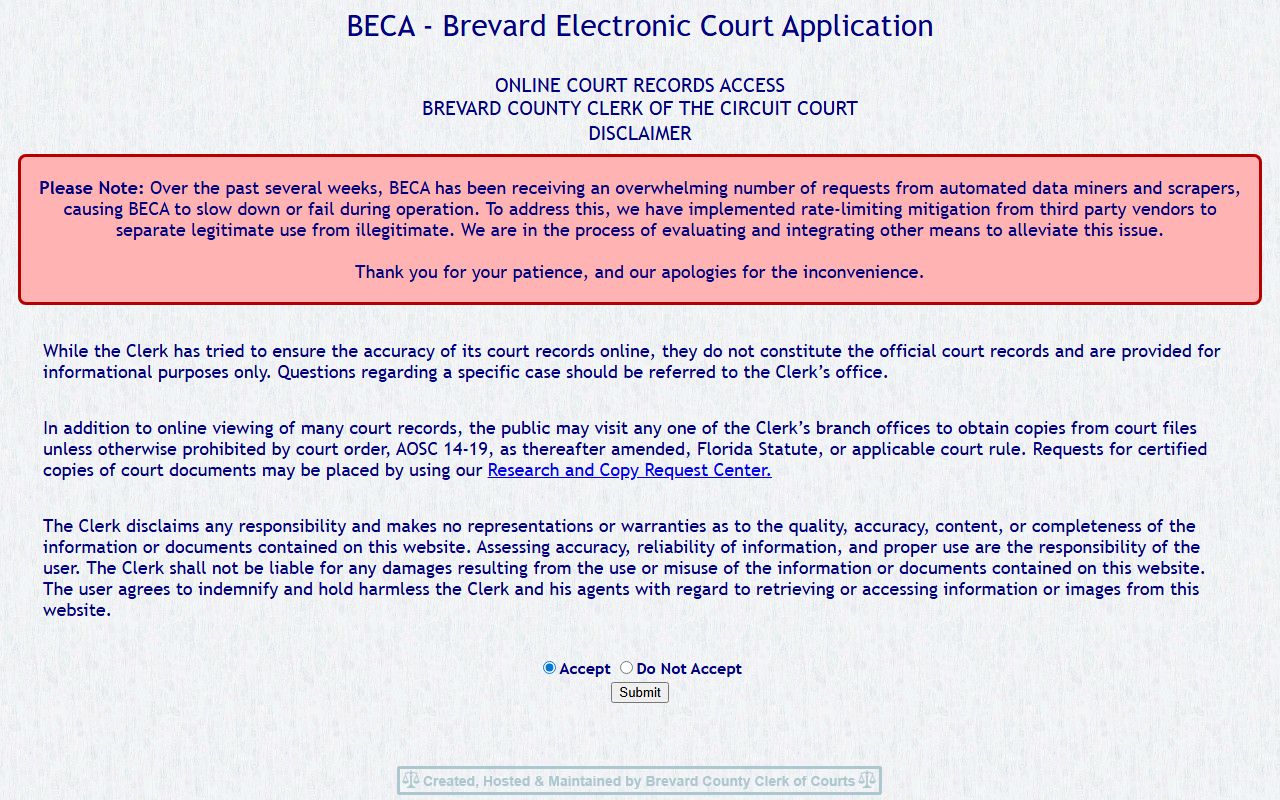
The BECA public access screen also warns that heavy automated scraping can slow the system, so a steady, specific search works better than rapid repeated queries.
BECA is the county court file, but it is not the only charge lookup. The jail roster shows the arrest and booking charges and any pending court date, and the Sheriff says charges, bond, and court dates can also be confirmed by phone at (321) 690-1501. For a statewide picture of charges across counties, a Florida criminal-history search reaches beyond Brevard. Use the county case file first, then widen out if the case may sit in more than one circuit.
BECA Search Options and Access Levels
BECA is not a single search box. It offers several ways to find a case, which matters when a name is common or you only know part of the detail. The table lists the public search options and the controls each one uses.
| BECA Option | Fields and Controls |
|---|---|
| Person Name | First, middle, and required last name with Begins With or Exactly matching, plus date of birth and a filing date range |
| Case Number | Segmented fields: a 05 prefix, year, party or type segment, sequence, case type, and branch |
| Case Type | Case type dropdown, optional judge code, and a begin and end filing date |
| Citation Number | A seven-character alphanumeric citation |
| Arresting Agency Report | Agency dropdown plus a report number, with at least five characters required |
| Warrant Name | First, middle, and required last name with matching controls, plus date of birth |
Registered or subscriber access is available to those who sign the BECA agreement, which can be emailed or mailed to the Clerk's BECA Support address in Titusville.
How Charges Get Filed After an Arrest
The court record begins when a charging document is filed. After the booking at the jail, the prosecutor decides whether and how to charge. The document type depends on how serious the case is and how it reaches court. The three main types are below.
| Complaint | Information | Indictment | |
|---|---|---|---|
| Filed By | Officer or prosecutor | State attorney | Grand jury |
| Common For | Misdemeanors and early filings | Many felonies | The most serious felonies |
| Starts | The case | The case | The case |
In Florida the state attorney files most felony cases by information after reviewing the arrest. The most serious matters can go to a grand jury for an indictment. Either way, the filed charges, not the booking charges, define the court record.
Watching First Appearance After an Arrest
First appearance is the first court event after a jail arrest, and it shapes the early court record. Because the jail's courtrooms sit inside the secure complex, the Sheriff limits public access and streams the proceedings instead. The schedule and the stream are public.
Initial proceedings are streamed Monday through Friday at 1:15 p.m. and on weekends and holidays at 9:30 a.m., though juvenile matters can delay the adult stream. A county administrative order confirms daily first appearances at the jail are handled by county judges. If someone cannot post a scheduled bail, they appear before a judge within 24 hours, who reviews the charges and probable cause.
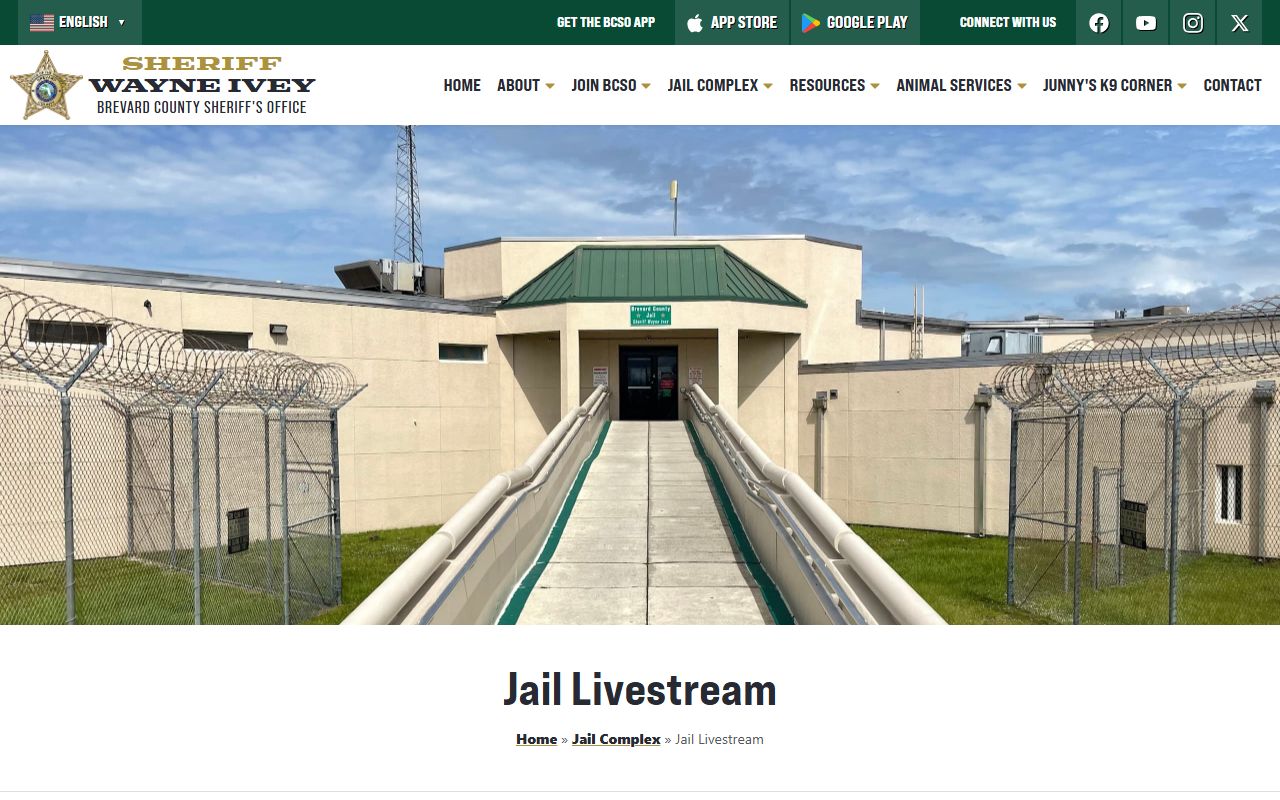
You can confirm the current stream times on the Sheriff's jail livestream page, which lists the initial-proceedings schedule.
Charge Status and What It Means
Charges change as a case moves through court. The booking charges on the jail roster can differ from what the prosecutor finally files, and the filed charges can shift again before trial. The common status terms are defined below.
| Status | What It Means |
|---|---|
| Pending | The charge is filed and the case is active, with no final outcome yet |
| Amended or Reduced | The prosecutor changed the charge, often to a lower level |
| Dismissed | The charge was dropped by the court |
| Nolle Prosequi | The prosecutor chose not to pursue the charge |
| Adjudicated | The court entered a finding on the charge, which can lead to a sentence |
Note: a booking charge is an allegation by the arresting officer, while the court record reflects what the prosecutor and the judge actually do with the case.
Formal Charges and the State Attorney
Brevard County sits in Florida's 18th Judicial Circuit, which covers Brevard and Seminole counties. The elected prosecutor is the State Attorney, William Scheiner, who was sworn in on January 14, 2025. After an arrest, the State Attorney reviews the case and files formal charges, or may decline, amend, reduce, or drop them.
The timing matters for anyone in custody. According to the Public Defender's office, when a person is in jail the prosecutor has 40 days to file formal charges. If charges are not filed within 33 days, the Public Defender can bring the person before the jail judge to decide whether the state gets seven more days. The State Attorney's main office is in Viera, with branch offices serving Brevard in Melbourne and Titusville and a Seminole office in Sanford.
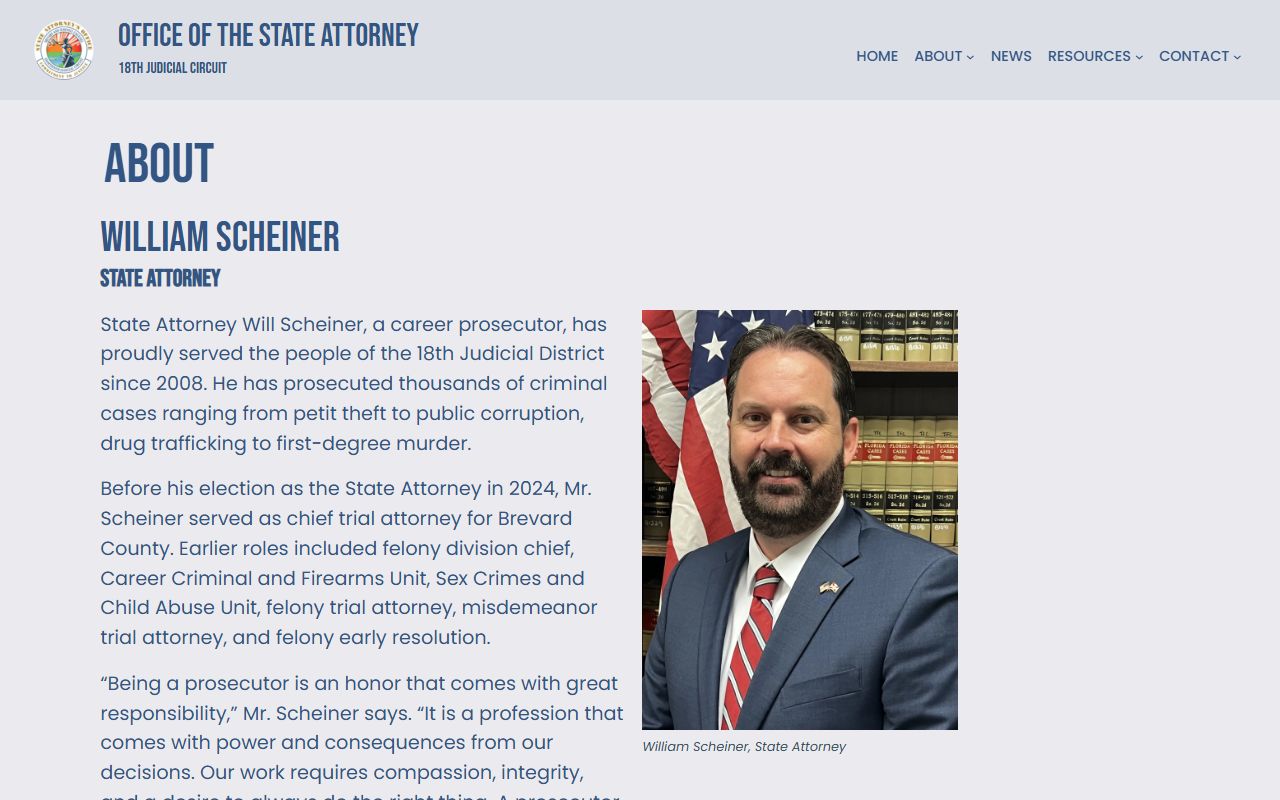
The official State Attorney biography and contact page lists the office address and phone for the circuit that prosecutes Brevard arrests.
Bond and Release After an Arrest
Bond is set or reviewed at first appearance and shows up on both the jail roster and the court file. A full bond can be paid by cashier's check, certified check, or money order to the Brevard County Clerk of Courts, or by cash or card through the TouchPay system. Some entries cannot be cleared by ordinary payment.
- Cash or surety bond - paid in full to the Clerk, or posted through a bail bonding agent the family chooses.
- No bond - no release amount is set on that charge or hold, so the person is not releasable on that entry by payment alone.
- Hold or detainer - another case or agency is keeping the person, even if a local bond is met.
- Purge - a delinquent court-ordered payment that can clear a related hold.
Posting bond does not bring an instant release. The Sheriff says release can take several hours while staff verify identity and complete checks. The office also notes that by law it cannot recommend a bonding agent.
Warrants That Lead to an Arrest
Many arrests start with a warrant, and the warrant can leave its own court trail. The Sheriff's Offender and Warrant Search page routes the public to state and court tools, and it warns that the information is for reference and should be confirmed with the originating agency. A bench warrant tied to a filed case will often appear in BECA.
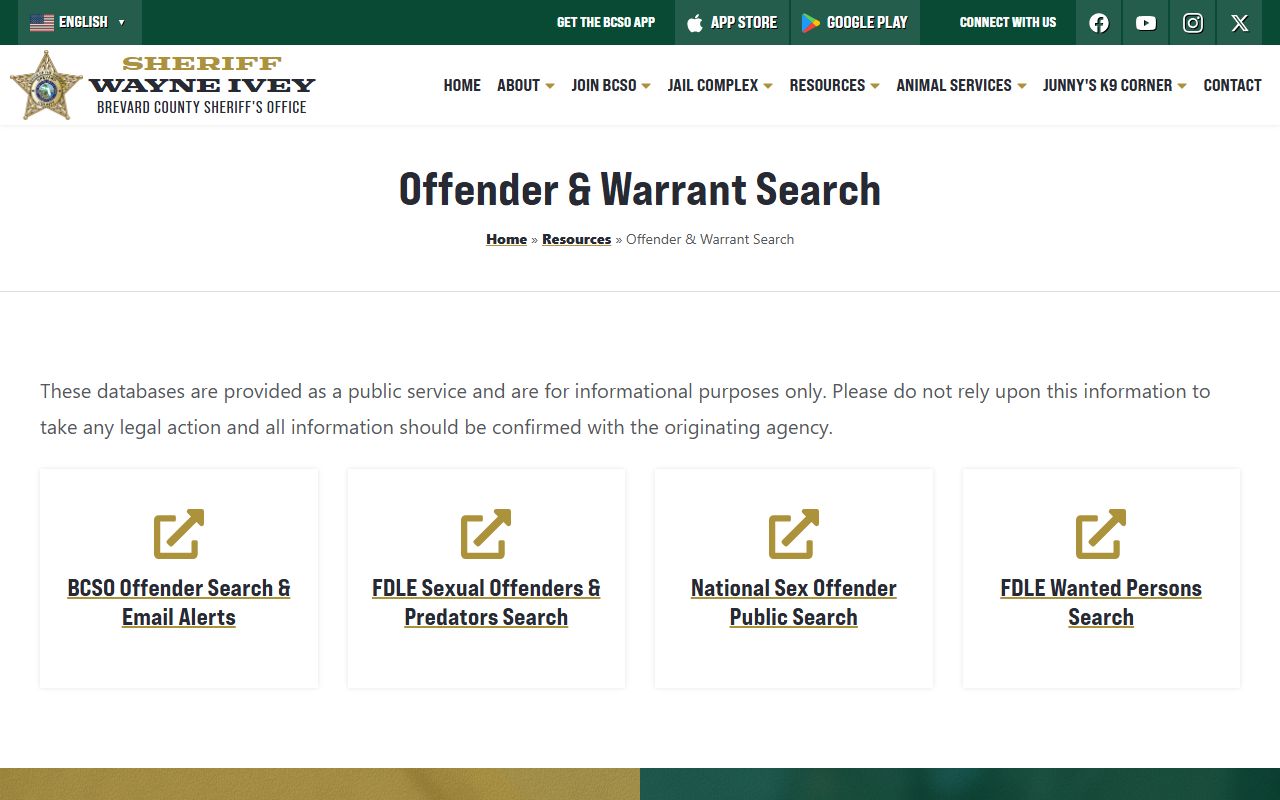
From the Offender and Warrant Search page, the Sheriff links the FDLE Wanted Persons search and other official tools, while the Clerk hosts a BECA warrant name search for case-based warrants.
Charges vs. Convictions
Being arrested and charged is not the same as being convicted. A charge is an accusation. A conviction is the result after a plea or a verdict. The court record shows both stages, and the difference is easy to miss when reading an active case.
| Charge | Conviction | |
|---|---|---|
| Stage | Accusation after an arrest | Verdict or plea |
| Burden of Proof | Probable cause | Beyond a reasonable doubt |
| Public Record | Yes | Yes |
Sealed vs. Expunged Arrest Records
Florida law gives two routes to limit public access to an eligible record after an arrest. Sealing restricts a record from general public view. Expunction goes further and orders the record removed or destroyed. Both are court-ordered and both depend on eligibility under state statute.
| Sealed | Expunged | |
|---|---|---|
| Visibility | Hidden from the general public | Removed or treated as if it never existed |
| Law Enforcement | Limited access remains | Very limited access |
| Florida Statute | § 943.059, court-ordered sealing | § 943.0585, court-ordered expunction |
Eligibility is specific and not automatic, so an attorney or the Clerk is the right source on whether a given case qualifies.
Restricted Court Records After an Arrest in Brevard County
Not every record after an arrest is fully open. Florida's public-records exemptions can withhold or redact parts of a file. Juvenile matters, sealed or expunged charges, and active investigations are common reasons a record is limited. When part of a record is withheld, the office should cite the statutory basis under the exemptions law.
For older files or certified copies, the Clerk's Research and Copy Request Center handles requests, and branch offices can provide copies in person unless a court order or rule blocks it. The right custodian depends on the record: the Clerk for court files, the Sheriff for arrest and jail records, and the State Attorney for prosecutor records where available.